Sunscreen for Singapore — SPF, PA and iron oxides
The cheapest pigment treatment is a habit. How to read a bottle in a city that has no winter, and why a hat is still part of the prescription.
Published 26 May 2026
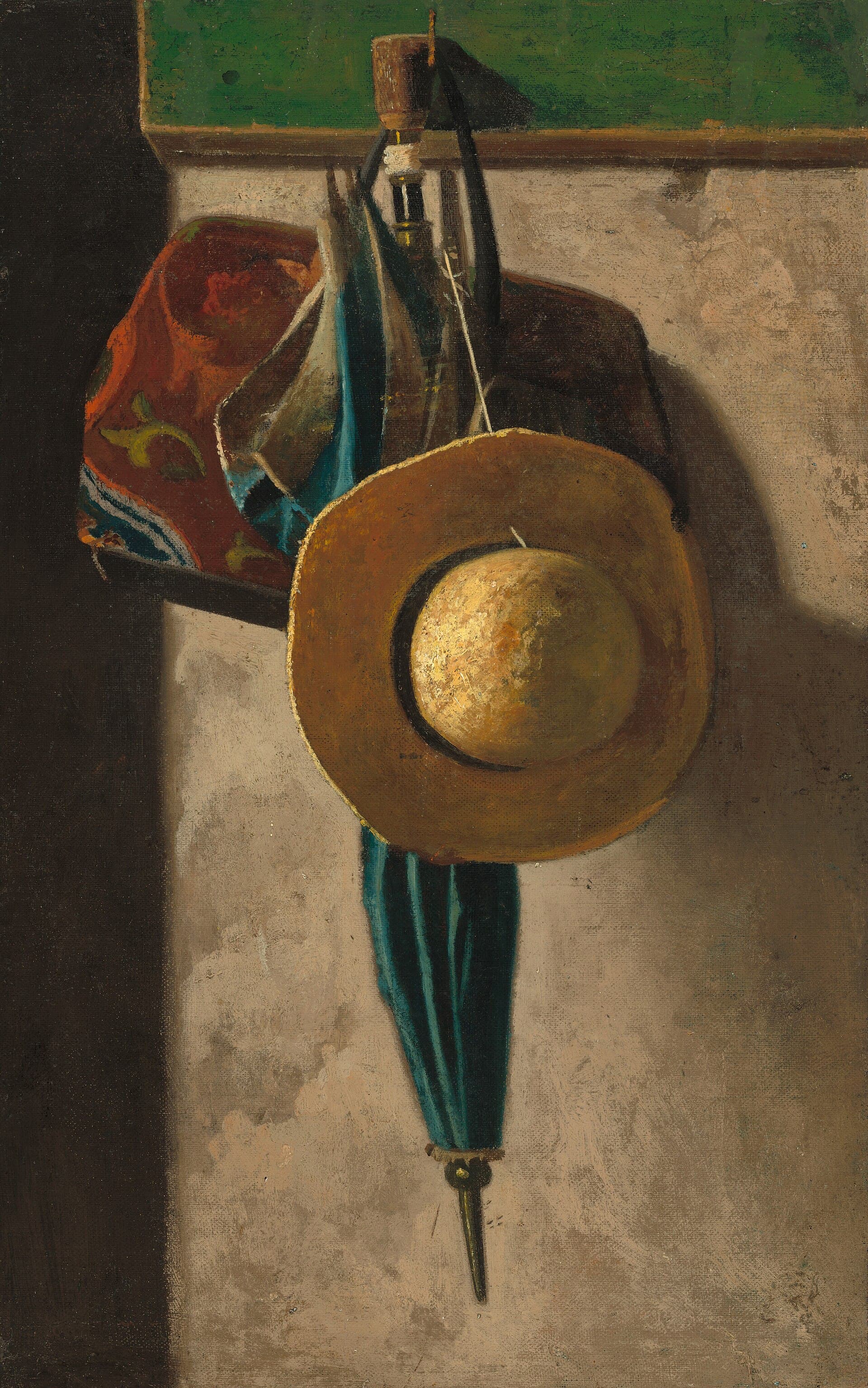
Photo: John Frederick Peto. Public domain. Source · See all image credits.

Singapore does not offer you a polite UV season. It offers you a lunch hour. Every pigment essay on this site ends here because this is where the invoices fail.
The old clinic sold lasers. It also, if you read the small hours, sold the idea that a treatment could outrun the sun. It cannot.
SPF is a laboratory number
SPF speaks mainly to UVB, the burning wavelength. SPF 30 versus 50 is not a moral ladder if you apply a smear. Most people use less than the two milligrams per square centimetre the number assumes. Put on more than you think, especially ears, hairline, neck. Reapply when you have been outside long enough to earn a drink.
A high SPF on a face that then sweats through a walk to the MRT is a rumour unless you top it up. Sticks and powders are helpers, not a first coat.
PA is the Asian sentence
PA+, ++, +++, ++++ is a shorthand for UVA protection. UVA walks through clouds and windows and is the wavelength pigment remembers. If your concern is melasma or PIH, a high PA is not nerdery. It is the point.
Iron oxides and the visible
Visible light — ordinary bright day, some indoor brightness — is part of the melasma story. Tinted sunscreens that include iron oxides are widely discussed as extra cover against that light. They are not makeup in the Instagram sense. They are a colour that works for a medical reason. They can look wrong on some tones; find one that does not make you skip it.
Texture is adherence
A formula you hate is a formula you will not wear. Gel, fluid, mineral, hybrid — pick the one that survives 32°C and a mask. Stinging around the eyes is how people leave a circle untreated; see dark circles and do not use that as an excuse to skip the rest of the face.
Fragrance-free helps the reactive. Chalky mineral casts are a reason to sample, not a reason to go bare.
Hats, glass, and the unfashionable
A hat is not an insult to your sunscreen. Car glass and office glass are not caves. Umbrellas are already part of this city’s grammar — use them for light, not only rain. After a device, this paragraph becomes aftercare.
Children, sport, and the rest of the body
Faces get the essays. Chests, hands and bald spots collect the years. Sport needs a formula that survives sweat and a reapplication that survives pride.
Questions for a shelf, not a guru
Will I wear this at 8am? Does it sit under my makeup? Does it sting? Is there a tint I will forgive? If a clinic sells a tube with the laser, ask what is in it and whether a supermarket bottle with honest SPF and PA would do the same job.
Sunscreen is not a personality. It is the only daily treatment that every careful pigment plan agrees on. The rest is optional theatre.
How to put it on so the number means something
Two finger-lengths for face and neck is a common teaching picture. Ears, hairline, eyelids if the formula allows, lips with a stick. Wait a minute before makeup. Reapply every two hours in genuine outdoor time — a stick or a compact over makeup is imperfect and still better than pride.
If you sweat through a walk, you have removed some of the film. Top up. This is not failure. This is the weather.
Children and the rest of the household
School sport is a UV appointment. A parent’s leftover facial sunscreen may sting a child’s eyes. Use a formula they will tolerate and a hat the school will not confiscate. Hands and necks age in family photographs first.
After a device, the rules tighten
Some surfaces wait a day before any product. Some want a mineral formula only. Some want a tint. Follow the sheet, not a video. The week after a peel is not the week you try a new drugstore bottle because it was on offer.
If a clinic’s “medical sunscreen” is simply a high-PA tinted fluid, you may find a twin on a shelf. Ask for the ingredients if you care. You are allowed to spend less on the tube and more on the habit.
Makeup, flash and the photograph problem
Some sunscreens flash white in wedding photography. Trial them under a flash, not only in a bathroom. Tinted formulas often behave better on camera and, for melasma, better in visible light. If a makeup artist hates your SPF, change the SPF before the week, not the artist at the door.
Powder SPF is a top-up. It is not a first coat, no matter what a reel said.
Sweat-proof, waterproof, and the swim that is a lunch
Claims of water resistance are timed in minutes of swimming, not in a life. A soup lunch is not a swim and still removes film. Reapply. A pool afternoon is a reapply appointment. Children will not remember. You will, if you decide to.
The bottle you will finish
The best SPF is the one that is half empty at the end of the month. If your expensive tube is still full in June, it has failed even if the PA is perfect. Buy a texture you like in a size you will use. Keep a stick in the bag you actually carry. Forgive yourself for the days you forget, then do the next day. Pigment is a long acquaintance. So is the habit.
Eyes that sting, and the stick that saves them
If every fluid burns your lids, use a stick on the orbital bone and a fluid on the rest. You will look slightly assembled. You will also keep wearing it. A perfect formula you abandon is a pigment plan you abandoned. Assembly is allowed.
Children, elders, and the bottle that must be shared
A household SPF that only the keenest adult will wear is a household without a habit. Choose textures people will finish: a stick by the door, a fluid that does not sting school-run eyes, a tint the elder will actually put on a hand. Perfect filters on an unused bottle protect no one.
Reapplication is the unfashionable half of the label. Set it to something you already do — the iced drink, the 3pm meeting, the walk to the gate. If the plan requires a vanity in a food court, the plan will fail, and the failure will be blamed on “sensitive skin.”
When a clinic dismisses sunscreen as “basic,” they have told you how they think. Basic is how pigment plans survive this latitude. Everything else is optional theatre.
More in Daily Care.
Questions people ask
- What SPF should I use in Singapore?
- Daily-use guidance commonly starts at SPF 30 and many pigment plans talk about SPF 50. The unused bottle of SPF 100 in a drawer helps no one.
- What does PA mean?
- It is a rating, used widely in Asia, for protection against UVA — the ageing, deeper wavelength. Look for a high PA if you care about pigment and long office years.
- Do I need sunscreen indoors?
- If you sit by a window or commute through brightness, yes. Visible light and UVA are not only a beach story. Tinted formulas with iron oxides are often discussed for melasma.
More in Daily Care
The aftercare week in a tropical city
What clinics typically ask you to do after a laser, peel or needling — translated for humidity, hawker centres and a Monday meeting.
16 June 2026
Retinoids, vitamin C and niacinamide — a careful primer
Three names on every shelf, three different jobs. How Singapore readers might meet them without turning a bathroom into a lab.
9 June 2026
A tropical skincare routine that can survive the commute
Humidity, air-conditioning and a short morning — a small routine for Singapore that does not require a twelve-step religion.
2 June 2026